
Frequently Asked Questions
To help your fitting appointment go smoothly and ensure the best possible results, please take a few minutes to review the Frequently Asked Questions before your appointment. You'll find important information about what to bring, proper undergarments and shoes, appointment timing, and alteration expectations. Arriving prepared allows us to spend more time focusing on the fit of your garment and helps ensure a successful alteration experience from start to finish. If you have any questions after reviewing the FAQs, please don't hesitate to reach out.

Shoes
One of the most important items to bring to every fitting is the exact pair of shoes you plan to wear with your dress. There is no magic formula for hemming based solely on heel height. Two pairs of shoes may have the same heel measurement but affect the way a dress hangs very differently depending on factors such as platforms, wedges, kitten heels, sole thickness, and overall shoe construction. To achieve the correct length and ensure your gown looks its best, the dress must be fitted and hemmed while you are wearing the actual shoes you'll wear on your event day. For this reason, shoes are required at every fitting involving hem and bustle alterations.
There is also no magic formula to make your dress work for heels during the ceremony and flats during the reception. You will have to choose which shoes you want the dress hemmed for and either have it slightly shorter with heels or too long with flats.

Undergarments
Choosing the right undergarments can make a big difference in how your gown fits and feels. For many strapless or structured wedding gowns, a long-line or strapless bra is often unnecessary, as built-in support can frequently be achieved by sewing bra cups directly into the gown for added shape and comfort. For dresses that are more fitted through the hips and thighs, lightweight shapewear or Spanx-style bike shorts can be a great option to minimize visible lines, create a smooth silhouette, and help prevent thigh chafing during your wedding day. Please bring any undergarment options you are considering to your first fitting so we can determine what works best with your gown. In some cases, shapewear can even be modified, altered, or discreetly attached to the gown to create a seamless look and maximize comfort.

How many fittings?
For most wedding gowns, plan on a minimum of three fittings, with each appointment lasting approximately 45 minutes to 1 hour. During the first fitting, we'll assess the alterations needed, discuss any redesign ideas or customizations, and provide a cost estimate. The second fitting is used to evaluate fit adjustments, review any custom additions, and engineer the bustle if the gown has been hemmed. The final fitting is your opportunity to see the completed gown and ensure everything is perfect. We recommend bringing your mother, maid of honor, or another trusted helper so they can learn how to properly zip or fasten the gown and bustle it for the reception.
Some gowns require additional appointments. If your dress needs extensive fitting adjustments, significant redesign work, or if your body is expected to change during the alteration process due to pregnancy or a weight-loss journey, plan on four to five fittings. For bridesmaid dresses, mother-of-the-bride/groom gowns, and most formalwear, two fittings are typically sufficient to achieve an excellent fit.

What's the cost?
The cost of alterations varies greatly depending on the gown, its construction, and the scope of work involved. Factors that affect pricing include the number of layers in the skirt, the type of hem finish used on each layer, the complexity of the fit adjustments, and whether lace, beading, or appliqués must be removed and carefully replaced. Some alterations may also require sourcing additional fabrics, lace, trims, buttons, or specialty materials, which adds both material costs and the time needed to locate the best match.
Because every gown is unique, exact pricing cannot be determined without seeing the dress in person. First fittings are always complimentary, and in most cases a reasonably accurate estimate can be provided during that appointment. If custom fabrics, trims, or specialty items need to be sourced, a final estimate will be provided once those costs have been confirmed. My goal is always to be transparent about pricing and ensure you understand the scope of work before any alterations begin.

Who can come to the fittings?
My studio is designed for one-on-one attention and has comfortable seating for up to two guests in addition to the person being fitted. You're always welcome to bring your mom, sister, maid of honor, or another trusted support person to any appointment. In fact, I highly recommend bringing someone to your final fitting so they can learn the details of your gown, including how to properly fasten it, manage any specialty features, and bustle it for the reception.
While it can be tempting to bring a larger group, keeping appointments small allows for more room to work and creates a more relaxed, productive fitting experience. Much like dress shopping, too many opinions can sometimes make decision-making more difficult when the focus should be on what makes you feel beautiful, comfortable, and confident in your gown.

When should I schedule?
You should call to get on the list for alterations as soon as you purchase your dress. Most seamstresses book up very quickly so assuring you have a spot in line is important. This first phone call might not be choosing an exact date and time but rather a ballpark of when to begin. For most wedding gowns, the ideal time to begin alterations is 8–12 weeks before your wedding date. This allows enough time to complete alterations without rushing while still accounting for any body changes that may occur before the wedding. If your gown requires extensive redesign work, significant fit adjustments, or custom additions, you may want to schedule your first fitting even earlier. Brides who are pregnant or actively losing weight should contact me as soon as possible so we can develop a fitting schedule that best accommodates anticipated changes.
.jpg)
What Is a Bustle and Do I Need One?
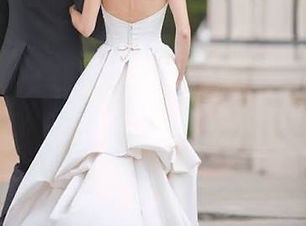
If your wedding gown has a train, you'll almost certainly need a bustle. A bustle allows the train to be lifted and secured after the ceremony, making it easier to walk, dance, and enjoy your reception without dragging the gown or risking damage to the train. There are three primary bustle styles: American (or pick-up) bustles, which gather the train on the outside of the gown; French bustles, which tuck the train underneath for a more seamless look; and Ball Gown bustles, which are designed to manage the volume of fuller skirts while maintaining their shape. Not every bustle style works on every dress, and depending on the length and design of the train, a bustle may require anywhere from a single pickup point to more than twenty. We'll discuss the bustle options that best suit your gown during your first fitting, and once any hemming alterations are complete, we'll carefully pin and engineer the bustle to ensure it functions properly and complements the design of your dress.

Re-design and custom work?
Absolutely. Custom alterations and gown redesigns are one of my favorite aspects of bridal sewing. Whether you're envisioning a simple addition like a bow, sleeves, straps, or a modesty panel, or a more extensive transformation of an off-the-rack or sample gown, there are often many possibilities to make your dress uniquely yours. The success of a redesign often depends on the availability of matching fabrics, lace, appliqués, buttons, and trims. If you're ordering a new gown and have customization ideas in mind, it's always a good idea to ask your bridal salon whether additional materials can be purchased from the designer at the time you place your order. This can make future alterations much easier and ensure the closest possible match. Because many local fabric stores have closed in recent years, sourcing specialty materials may require additional time and effort, so it's best to begin discussing custom work as early as possible in the alteration process.

Fitting Essentials
Bring the following to your fittings:
-
Shoes
-
Undergarments/shapewear
-
Veil (if you'd like - steaming at no additional charge)
-
Accessories you're considering
-
Inspiration photos for customizations
-
A hair clip or tie to keep your hair out of the way during adjustments
-
A friend to the final fitting who will be helping you dress and bustle on wedding day
-
The bag your gown came in (I will keep this for safe storage while your gown is at my studio)
What not to bring:
-
More than 2 additional people
-
Coffee or food that could spill on the dress
-
Dirty shoes/dirty hands - wash up before your appointment as soil and grease can be easily transferred to delicate fabrics
How to Schedule
-
Use the Contact Form on the Home Page
-
Email: cindesewing@gmail.com
-
Text: 303-345-7888
How to Pay
Currently accepted forms of payment
-
Cash
-
Check
-
Venmo
First fittings and consultations are always free and without obligation
A deposit is only collected if additional fabric, trim, etc will need to be sourced
Full payment is due at final fitting and before picking up the dress.

CINDE JAMES SEWING & ALTERATIONS
Located in Windsor, CO
phone: 303-345-7888
email: cindesewing@gmail.com
